Monday, January 9, 2012

The toe-cap ballerina flat, an invention turned into fashion staple

Exactly 55 years ago, Coco Chanel launched her famous two-tone showstopper pump: a sleek beige chassis with an trendy black toe-cap, inspired, like most of the designer's innovations, from men's sportswear. Now, a half-century later, the toe-cap has turned into one of Chanel's trademarks, featuring almost on every pair of shoes designed. The ballerina toe-cap flat is quite possibly the most popular piece out of them and reappears each season, as a classic or reinterpreted with added edge. Indeed, it is so dearly coveted that other fashion brands have borrowed the toe-cap ballerina concept and restyled it in their own way. This Fall/Winter season has surely welcomed Giuseppe Zanotti's reinterpretation of the staple, embellished with crystals and a T-bar strap. 

crystal embellished ballet flats: Giuseppe Zanotti

Now to you glamorous city girls out there, what could be more comfortable and stylish than a sleek pair of Chanels or Zanottis (like mine), equally laid back with well worn jeans and vintage tees, happy to attend midnight suppers, then get up early the next morning for a long trek to the office? I mean seriously, it is difficult to imagine any other single shoe that so seamlessly takes the place of both sneakers and evening sandals, while managing to look effortless and fabulous.

Sunday, January 8, 2012

Proenza Schouler will take the 1950s by storm, starting this Spring

Proenza Schouler SS 12 - all images via Jak & Jil

Sunday morning, Proenza's calling. Oh yes, those wall pictures show nothing else but just a microcosm of what Jack McCollough and Lazaro Hernandez have been concocting for the coming season. Inspired by 1950s car interiors and Googie architecture which Hernandez describes as "mid-century road-stop", the dynamic duo certainly restored the cutting-edge in a trend that was until now decrepit. Intrigued yet? Oh just you hold on, both you and your wardrobe will be.


Working with new materials, the designers explore craft, weaving raffia into backless black dresses or sweaters and skirts with graphic, geometric designs. Eel skin is even used to create a striped dress, and cut into glossy knee-length skirts that were paired with tulle T-shirts stitched with swirling flowers. A melange of sulfur yellow, sky blue and black perfectly paint an aerodynamic dress, and curvaceous trompe l'oeil frocks combined Hawaiian florals with microdots. 


The 1950s car interiors inspiration does not stop here. Not only has it skillfully been reinterpreted into edgy clothing , but it also features among the collection's accessories. The painted wooden heel detail on those ridiculously rad sandals is just to die for. Classic looking yet with a modern twist, these fabulously chunky jewels will make you love those warmer days-- even more if you can slide your Proenza styled feet into a vintage convertible...


Thursday, January 5, 2012

Ode to those warmer days with the cult of the trench

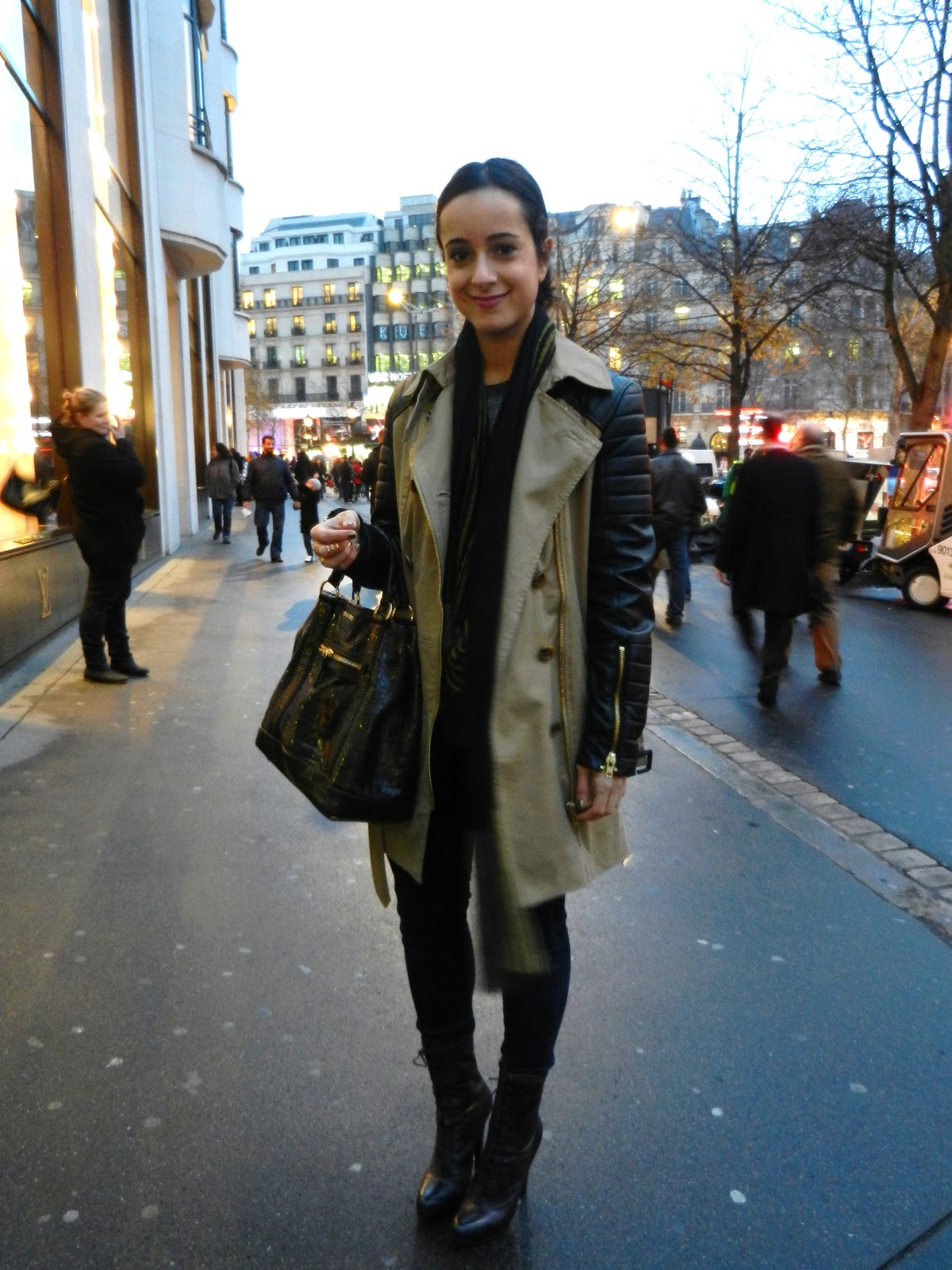
Happy New Year lovelies. While I recover from my jetlag and the culture shock that is the NYC freezing cold, I thought I'd share my last pictures in Paris and look back at those warmer days that inspire the cult of the trench. 

Have you ever wondered how and why the trench coat was introduced and became such a style icon? Well, I may have a few answers to your burning questions. The trench coat was developed as an alternative to the heavy serge greatcoats worn by British and French soldiers in the First World War

The debate surrounding the invention of the trench coat concerns both Burberry and Aquascutum, as both claim to have invented the garment. While Aquascutum claims to have created it in the 1850s for officers in the Crimean war, Thomas Burberry submitted a design for an army officer's raincoat to the United Kingdom War Office in 1901, using gabardine as the base of his popular trench coats. Credited with creating this unique wool material in the 1870s Burberry guaranteed that the gabardine repelled water, was durable, virtually cease-proof and resistant to the elements, while remaining porous and well-ventilated enough to be comfortable and cool for the wearer. Regardless of who the true inventor was, both Burberry and Aquascutum manufactured trench coats for military use in WWI and WWII, as these garments were ideal for harsh weather conditions. 

The Burberry trench coat on WW1 soldiers

Demand for the trench coat eventually rose among civilians, as it was ideal for both businessmen and women alike. In her book The Classic Ten: The True Story of the Little Black Dress and Nine Other Fashion Favorites, author Nancy MacDonell Smith looks at cultural examples to explain the magnetism of this trend. “You’re never at risk of looking trite in a trench coat. It’s a garment that means business,” she says. She goes on to say that it is that precise nature of the trench that makes it so compelling. “You may look all buttoned-up when you’re wearing one, but underneath you could be any number of things.”

trench coat: W118 By Walter Baker

A wardrobe classic, the trench has always kept its structural integrity despite being reinterpreted each season. It is truly a timeless piece and its multi-seasonal fabrics and colors make it appropriate for all occasions. Explore the cult of the trench even further with the Art of the Trench by Burberry and check out my version of this iconic piece if you're in a rocker chic frenzy like me!


Enjoyed my recollections above? Until they come back to us, prepare for those warmer days with your own trench